Scleroderma
Systemic sclerosis
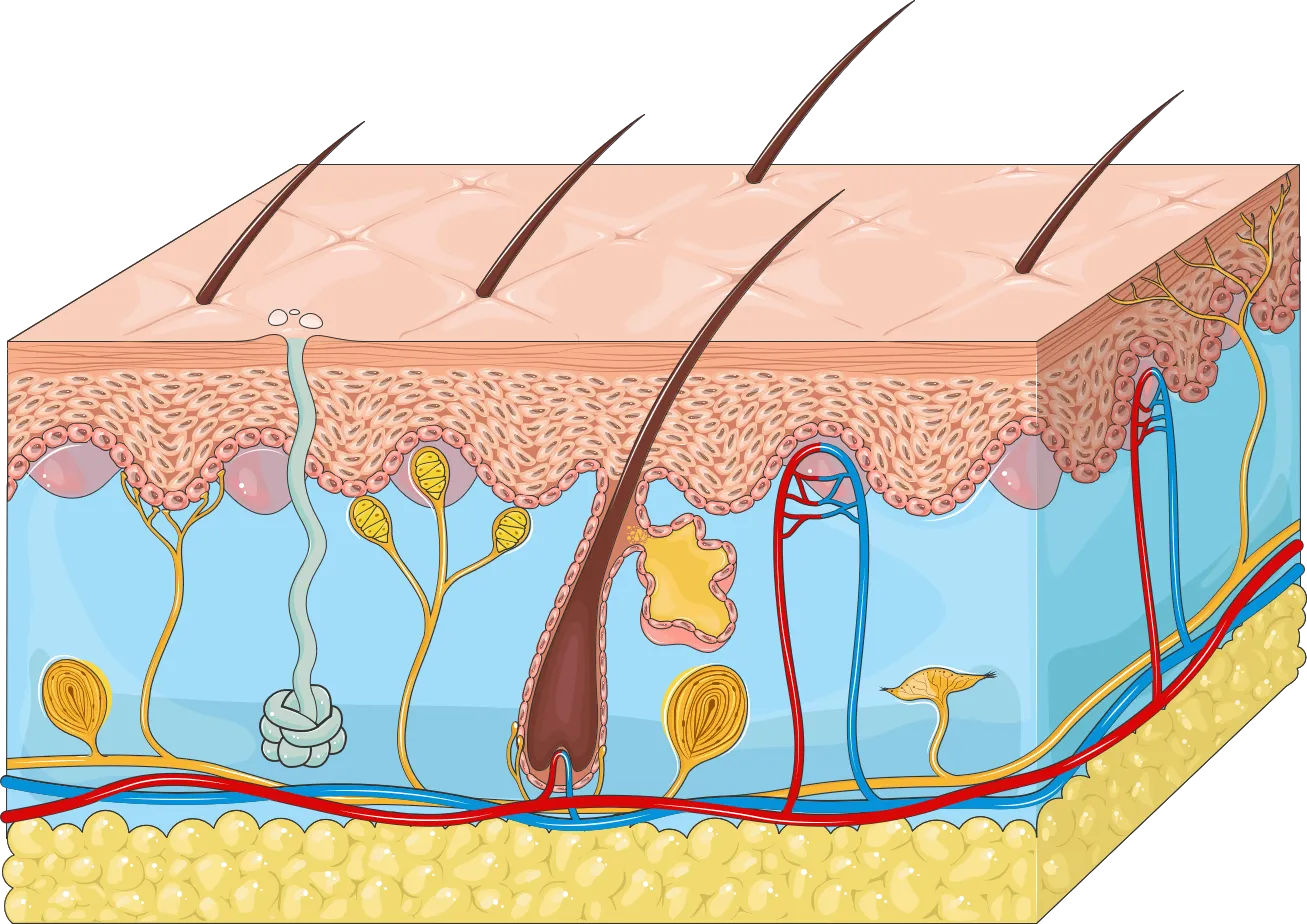
Autoimmune conditionThe immune system drives thickening and scarring of the skin, and sometimes internal organs, along with damage to small blood vessels.
For education only — this guide can't diagnose you. If these signs sound familiar, talk with a healthcare provider. Book a consult
What happens
Scar-forming cells lay down too much collagen. Limited forms mostly affect the fingers, hands, and face. Diffuse forms spread further and can involve the lungs, heart, kidneys, and digestive tract. Raynaud's is usually the first sign.
Who gets it
About four times more common in women, usually starting between 30 and 50.
Signs worth getting checked
- Fingers turning white or blue in the cold (Raynaud's)
- Swollen fingers that later become tight and shiny
- Sores on the fingertips
- Heartburn or trouble swallowing
- Shortness of breath or a dry cough
- Small red spots on the face or hands
- Stiff joints
Labs to ask about
- ANA
- Scleroderma antibodies (anti-centromere, anti-Scl-70, anti-RNA polymerase III)
- Lung function tests and chest CT
- Echocardiogram
- Blood pressure and kidney function
Treatments your doctor may discuss
- Medicines to improve blood flow for Raynaud's
- Acid-reducing medicine for reflux
- Immune-suppressing medicines for skin and lung disease
- Blood pressure medicine to protect the kidneys
Supportive steps to discuss with your provider
- Keep your hands warm, and avoid smoking and cold exposure.
- Moisturize daily.
- Eat smaller meals and stay upright after eating to ease reflux.
- Keep up regular lung, heart, and blood pressure checks.
See a doctor promptly if you have
- A sudden severe headache, very high blood pressure, or much less urine: go to the emergency room
- A fingertip turning dark
- Shortness of breath
Related conditions

Ready to find the root cause?
Dr. Lesher is a Naturopathic Doctor who focuses on autoimmune and chronic conditions in women. Since 2020, she's helped hundreds of patients stop managing symptoms and start healing.