For education only — this guide can't diagnose you. If these signs sound familiar, talk with a healthcare provider.
Book a consult →
What happens
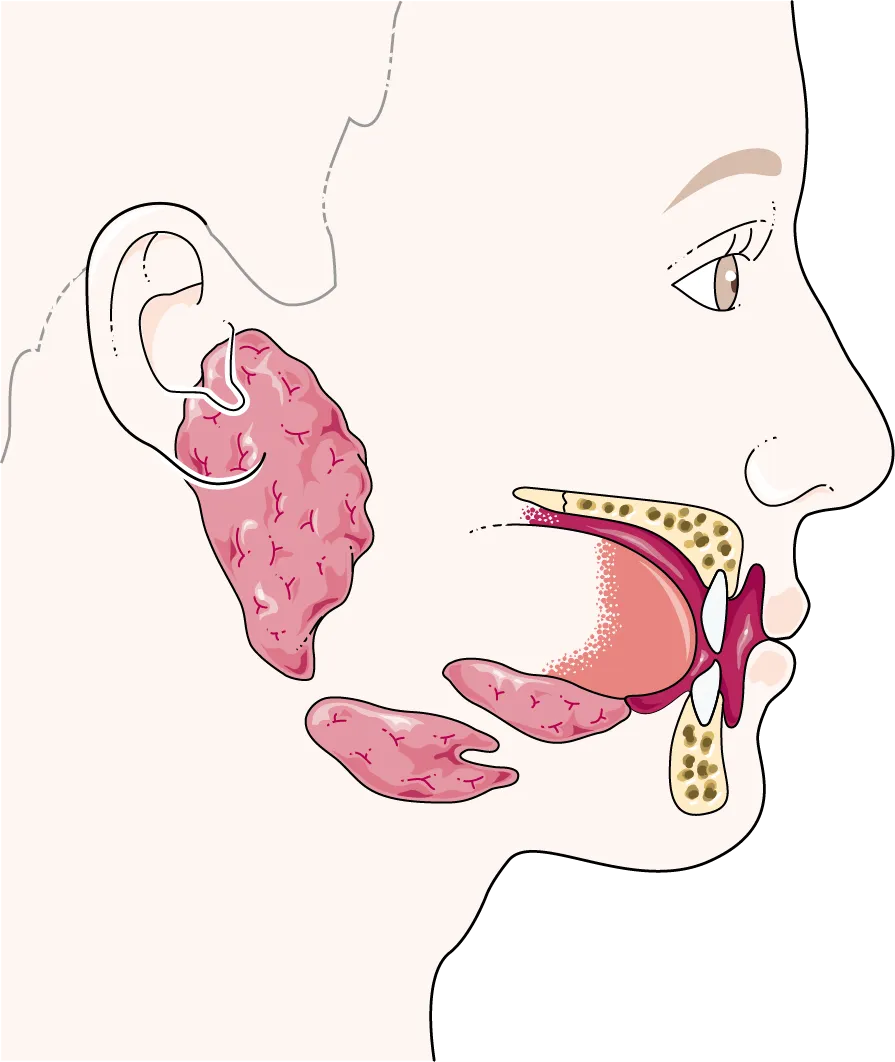
Immune cells move into the tear and salivary glands and reduce how much moisture they make. Sjögren's can occur on its own or alongside rheumatoid arthritis or lupus.
Who gets it
About 9 in 10 people with Sjögren's are women. It's most often diagnosed after 40.
Signs worth getting checked
Gritty, burning, dry eyes
A dry mouth, or needing water to swallow food
Tooth decay that comes on quickly
Swollen glands near the jaw
Vaginal dryness
Dry skin
Joint pain
Fatigue
Numbness or tingling
Labs to ask about
Anti-Ro/SSA and anti-La/SSB antibodies
ANA and rheumatoid factor
Schirmer test (measures tear production)
A lip biopsy of the small salivary glands in some cases
Treatments your doctor may discuss
Lubricating and prescription eye drops
Medicines that stimulate saliva
Hydroxychloroquine or immune-modulating medicines when other organs are involved
Regular dental care to prevent decay
Supportive steps to discuss with your provider
Sip water through the day and use sugar-free gum or lozenges.
Use fluoride toothpaste and get frequent dental cleanings.
Run a humidifier, especially at night.
Ask your prescriber whether any of your medicines cause dryness, such as antihistamines or some antidepressants.
Omega-3s may help dry eyes for some people.
See a doctor promptly if you have
A gland or lump in the neck that stays swollen
Eye pain or changes in vision
Numbness or weakness
You're pregnant or planning pregnancy and have anti-Ro/SSA antibodies, which can affect a baby's heart
Dr. Lesher is a Naturopathic Doctor who focuses on autoimmune and chronic conditions in women. Since 2020, she's helped hundreds of patients stop managing symptoms and start healing.