Type 1 diabetes
Including adult-onset (LADA)
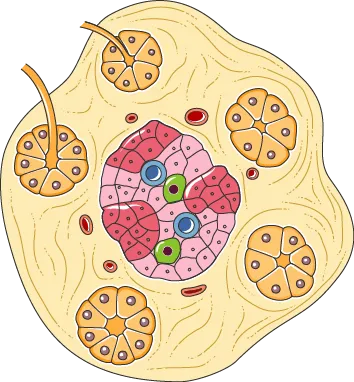
Autoimmune conditionThe immune system destroys the insulin-making cells in the pancreas, so the body can't make enough insulin to control blood sugar.
For education only — this guide can't diagnose you. If these signs sound familiar, talk with a healthcare provider. Book a consult
What happens
Antibodies against the pancreas's islet cells can appear years before symptoms. Once most insulin-making cells are lost, blood sugar rises. Type 1 often starts in childhood but can begin at any age. A slower adult-onset form (sometimes called LADA) is often mistaken for type 2 diabetes.
Who gets it
Type 1 diabetes affects women and men about equally. A family history and other autoimmune conditions, such as thyroid disease and celiac disease, raise the risk.
Signs worth getting checked
- Extreme thirst and frequent urination
- Unexplained weight loss
- Fatigue
- Blurry vision
- Frequent infections
- Nausea, vomiting, or fruity-smelling breath, which can signal an emergency
Labs to ask about
- Blood glucose and A1c
- Islet autoantibodies (GAD65, IA-2, ZnT8, and insulin antibodies)
- C-peptide (shows how much insulin you still make)
- Ketones when blood sugar is high
Treatments your doctor may discuss
- Insulin by injection or pump
- Continuous glucose monitoring
- Education on food, exercise, and sick days
- Regular screening for thyroid and celiac disease
Supportive steps to discuss with your provider
- Ask about antibody testing if you were diagnosed with type 2 diabetes as a lean adult, or if oral medicines aren't working.
- Consistent sleep, meals, and stress management make blood sugar easier to manage.
- Get screened for thyroid disease and celiac disease periodically.
See a doctor promptly if you have
- Vomiting, abdominal pain, deep fast breathing, or confusion: go to the emergency room
- Blood sugar that stays high, especially with ketones
- Frequent low blood sugar episodes
Related conditions
Ready to find the root cause?
Dr. Lesher is a Naturopathic Doctor who focuses on autoimmune and chronic conditions in women. Since 2020, she's helped hundreds of patients stop managing symptoms and start healing.